Moments of crisis—whether geopolitical, economic, or financial—create widespread fear and uncertainty. For the average person, the instinctive reaction is to retreat, liquidate assets, and wait for the storm to pass. But the smart investor understands that crisis and opportunity are two sides of the same coin. While others are selling out of fear, the disciplined investor is strategically buying.
This contrarian approach, famously summarized by Warren Buffett’s advice to be “fearful when others are greedy, and greedy only when others are fearful,” is what separates short-term speculators from long-term wealth builders . This article explores the core principles of smart crisis investing before answering the critical question on every investor’s mind today: in the midst of regional conflict, how is the UAE real estate market still a stable market?
The Contrarian Investor’s Playbook
During a crisis, markets are driven by emotion, not fundamentals. Panic selling pushes the prices of high-quality assets below their intrinsic value. The smart investor recognizes this dislocation as a rare buying opportunity. Their strategy is built on several key principles:
1. Focus on Tangible, High-Quality Assets: In times of uncertainty, capital flows away from speculative or intangible assets and toward those with real, physical value. Real estate is the quintessential tangible asset. It provides shelter, generates income, and cannot be created out of thin air.
2. Prioritize Long-Term Fundamentals Over Short-Term Noise: Smart investors ignore the daily headlines and focus on the long-term drivers of demand. Is the population growing? Is the economy diversifying? Is the government stable and pro-business? If the long-term fundamentals are strong, short-term volatility is simply noise.
3. Look for Yield and Inflation Hedging: A crisis often brings inflation. Smart investors seek assets that protect their purchasing power. Real estate is a natural inflation hedge. As the cost of living rises, so do rents and property values.
4. Seek Out Safe Haven Markets: Not all markets are created equal. A safe haven is a jurisdiction with political stability, a strong rule of law, a resilient economy, and a track record of protecting investor capital. During global turmoil, capital doesn’t just seek safe assets; it seeks safe locations.
Amidst Turmoil, How is the UAE Real Estate Market Still Stable?
It is impossible to ignore the current geopolitical tensions in the Middle East. For any investor, regional instability is a primary concern. However, the smart investor digs deeper than the headlines, and the data reveals a clear and compelling story of stability. Here is how the UAE real estate market is holding firm.
1. Acknowledged Risks, Decisive and Transparent Response
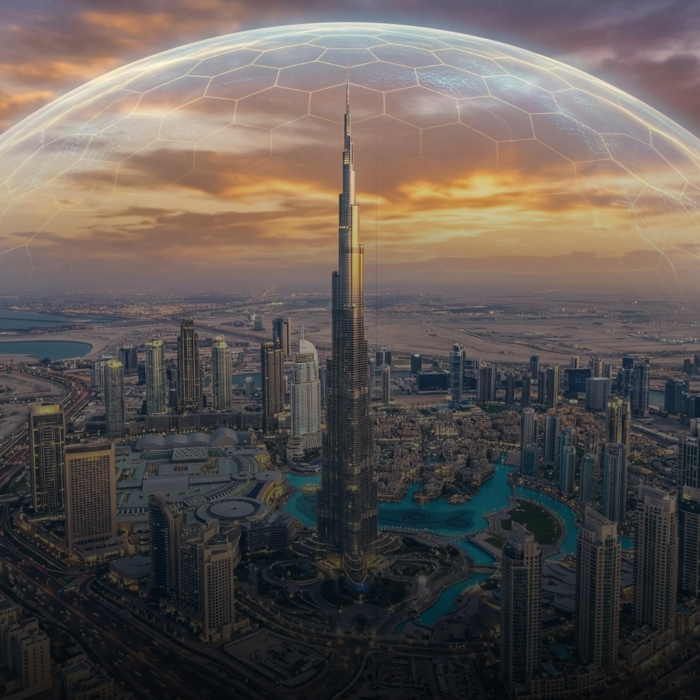
Unlike other regions where information is opaque, the UAE has been direct about the situation. The government has maintained a clear and consistent foreign policy of de-escalation and diplomacy, while also demonstrating its formidable defense capabilities. The UAE Ministry of Defence confirmed the interception of the vast majority of projectiles during recent tensions, a testament to its multi-billion-dollar investment in a state-of-the-art air defense network. This combination of diplomatic maturity and proven security creates a foundation of trust and safety that is critical during a crisis.
2. The “Flight to Quality” is Happening in Real-Time
Instead of capital flight, the opposite is occurring. The data shows that global investors are actively moving their capital to Dubai as a safe haven. In 2025, a year already marked by global uncertainty, Dubai’s real estate market shattered all previous records with AED 917 billion in total transactions.
Even in the immediate weeks following the recent escalation, market experts reported that high-value property deals continued to close at full price, with core demand from international and end-user buyers remaining steady. This is not a theoretical concept; it is the market voting with its wallet in real-time.
3. Structural Demand That Overpowers Geopolitical Noise
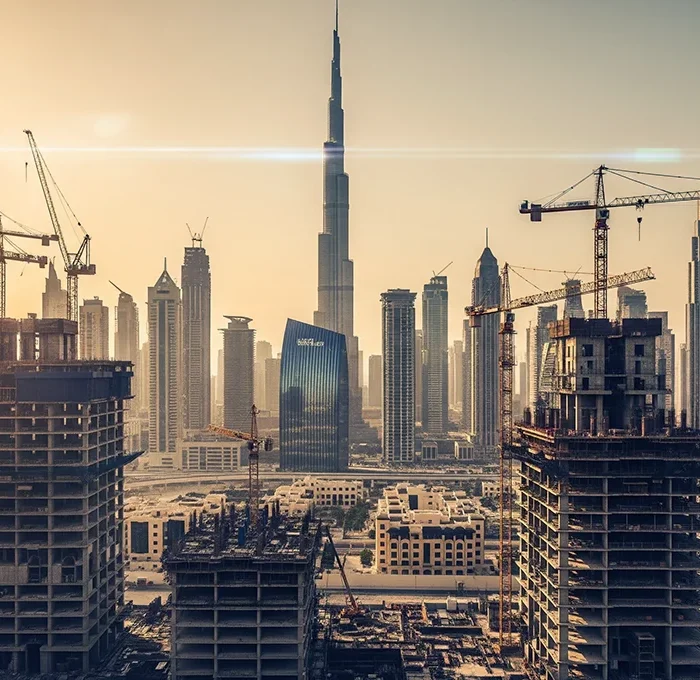
Short-term events create volatility, but long-term fundamentals create value. Dubai’s market is driven by one of the most powerful structural forces: relentless population growth. In 2025 alone, the city welcomed over 208,000 new residents. The Dubai 2040 Urban Master Plan projects the population will reach 7.8 million, creating sustained, non-speculative demand for housing for decades to come. This constant influx of new residents, talent, and business provides a powerful cushion that absorbs market shocks.
4. Unbeatable Financial Incentives in an Uncertain World
In a world of rising taxes and inflation, the UAE’s financial proposition becomes even more compelling. The promise of zero income tax on rent and zero capital gains tax on sales is a powerful incentive for wealth preservation. When combined with world-beating gross rental yields of 6-9%—compared to just 2-4% in hubs like London or New York—the financial case is undeniable. This high-yield environment provides investors with strong, consistent cash flow, a critical advantage when other asset classes are volatile.
Conclusion: The Smart Money Has Already Chosen
In moments of crisis, the smart investor does not run from risk; they accurately price it. They look past the alarming headlines to the underlying data, and the data for the UAE is clear. A government that is stable, transparent, and secure. A market that is seeing record-breaking capital inflows, not outflows. A city with unstoppable population growth. And a tax-free, high-yield environment that is second to none.
While others wait on the sidelines, paralyzed by fear, the smart investor recognizes that the UAE’s real estate market isn’t just surviving the current crisis—it is proving precisely why it is one of the world’s premier safe havens.