In our previous article, we examined the current regional situation and the measures the UAE government has implemented to ensure national security and economic stability.
But to truly understand the strength of a country, it is essential to look beyond the present moment and analyze how it has responded to past crises.
The true resilience of an economy is revealed not in times of prosperity, but in its ability to withstand and recover from adversity. For investors and residents alike, a nation’s track record during periods of disruption offers valuable insight into its long-term stability.
Over the past two decades, the United Arab Emirates has faced several major challenges — including the global financial crisis, a worldwide pandemic, and an unprecedented natural weather event. Examining how the country responded to each of these moments reveals a consistent pattern of decisive leadership, economic resilience, and rapid recovery.
The 2008 Global Financial Crisis: A Trial by Fire
What Happened
The collapse of Lehman Brothers in September 2008 triggered a global financial crisis that quickly spread across international markets. Credit tightened, capital flows slowed, and many economies entered a deep recession.
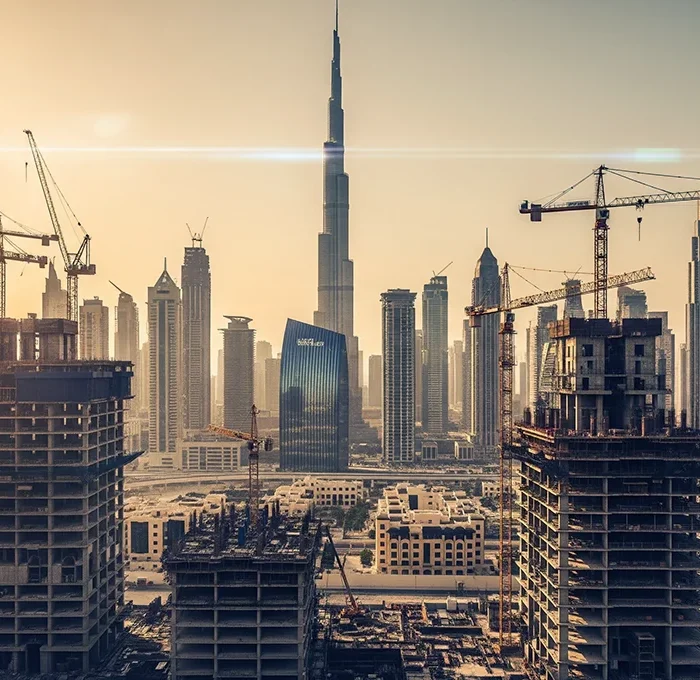
At the time, Dubai was experiencing an unprecedented real estate and construction boom, making the financial shock particularly significant for the emirate’s rapidly expanding property sector.
The Impact
The effect on Dubai’s real estate market was dramatic. After years of rapid growth, property prices declined sharply — falling by approximately 50–60% between late 2008 and mid-2009.
The downturn led to project cancellations, slower investment activity, and increased financial pressure on several large state-linked companies. One of the most widely reported moments of the crisis was the $26 billion debt standstill announced by Dubai World in November 2009, which drew significant global attention.
The Government Response
The UAE’s leadership responded with swift and decisive measures to stabilize the financial system.
The UAE Central Bank introduced liquidity support and guaranteed bank deposits to maintain confidence in the banking sector. Most notably, Abu Dhabi provided $20 billion in financial support to Dubai, reinforcing the strength of the UAE’s federal structure.
At the same time, regulators implemented new safeguards in the property sector, including tighter credit regulations for real estate financing and greater oversight of developers.
The Recovery
Despite the severity of the shock, recovery began sooner than many observers expected. Dubai’s economy returned to growth by 2011, and the real estate market began a gradual rebound in 2012. By 2014, property prices in several key areas had recovered to — and in some cases exceeded — their pre-crisis levels.
The recovery was supported by strong government intervention, continued infrastructure investment, and the UAE’s ability to attract international capital even during periods of global uncertainty. The crisis also accelerated the country’s commitment to economic diversification, reducing reliance on individual sectors.
The COVID-19 Pandemic: A Global Shutdown
What Happened
In early 2020, the COVID-19 pandemic triggered one of the most significant global disruptions in modern history. Borders closed, international travel collapsed, and major economies entered lockdowns.
For the UAE — a country deeply connected to global trade, tourism, and aviation — the sudden halt in international mobility represented a significant external shock.
The Impact
The UAE’s economy contracted by 5.8% in 2020, while Dubai’s tourism industry experienced a sharp decline in visitors. International arrivals dropped significantly from the 16.7 million visitors recorded in 2019.
The real estate market also experienced a slowdown as global uncertainty increased and international travel restrictions limited investment activity.
The Government Response
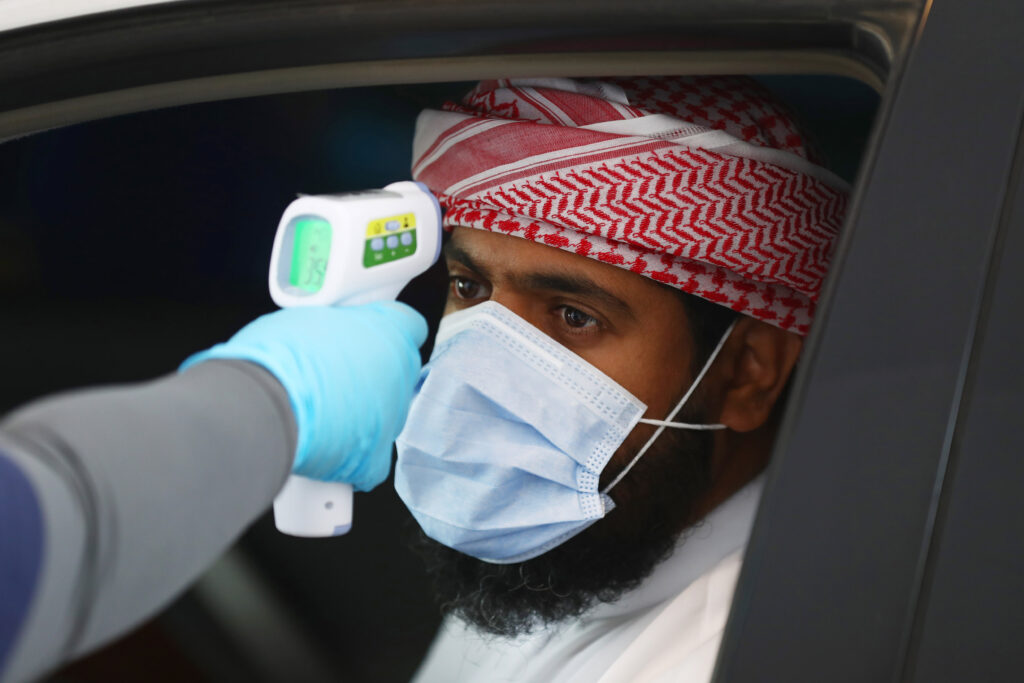
The UAE government responded with a comprehensive strategy designed to stabilize the economy while protecting public health.
Economic Stimulus
The UAE Central Bank introduced the Targeted Economic Support Scheme (TESS), which eventually expanded to AED 256 billion. The program provided zero-cost funding to banks, loan deferrals, and support for businesses and individuals.
Public Health Strategy
The UAE launched one of the fastest vaccination campaigns in the world. By early 2022, approximately 94% of the population had been vaccinated, enabling economic activity to resume earlier than in many other countries.
Strategic Vision
The government also proceeded with Expo 2020 Dubai, which was postponed to October 2021. The global event ultimately attracted 24.1 million visits, sending a powerful signal that Dubai remained open to international business and tourism.
The Recovery
The economic rebound was rapid. The UAE economy grew 3.8% in 2021 and expanded by over 6% in 2022, marking one of the strongest recoveries among major global economies.
The real estate sector also rebounded strongly. In 2021 alone, Dubai recorded over 52,000 residential transactions worth AED 114.2 billion, exceeding the combined total of transactions from 2019 and 2020.
By the first half of 2023, Dubai’s tourism sector had already surpassed pre-pandemic visitor levels, a milestone many major global cities had yet to achieve.
The 2024 Dubai Floods: An Unprecedented Natural Event
What Happened
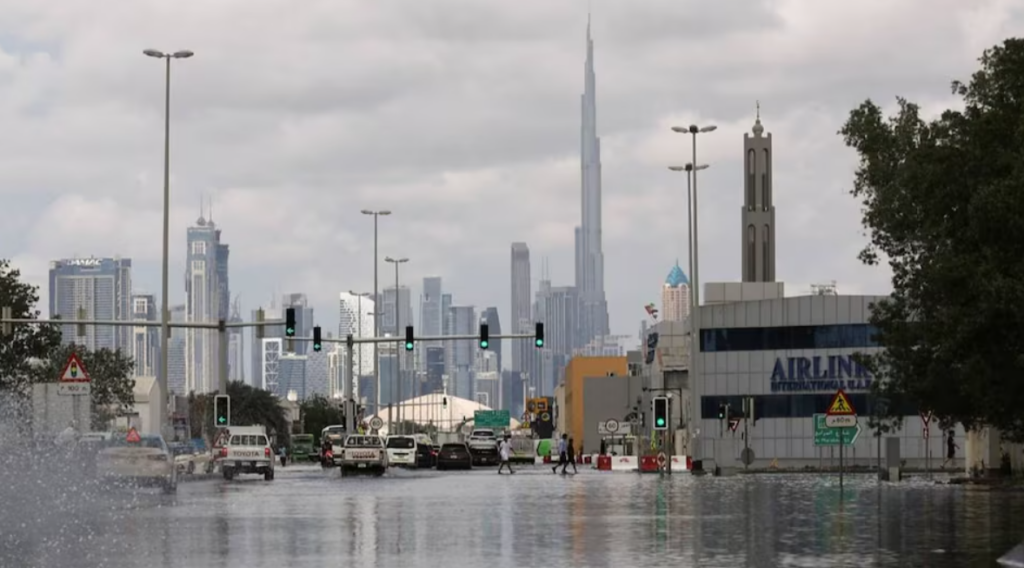
In April 2024, the UAE experienced the heaviest rainfall in 75 years of recorded history. The extraordinary weather event caused widespread flooding across parts of Dubai, temporarily disrupting roads, residential areas, and transportation infrastructure.
Dubai International Airport — the world’s busiest airport for international travel — also experienced operational delays during the event.
The Impact
The floods caused an estimated $850 million in insured losses and temporarily disrupted daily life and business activity across parts of the city.
The event highlighted infrastructure challenges related to extreme weather conditions that are historically rare in the region.
The Government Response
Authorities responded immediately with both emergency measures and long-term planning.
Immediate Support
Within one week, the UAE Cabinet approved an AED 2 billion relief fund to repair homes belonging to Emirati citizens affected by the floods.
Infrastructure Investment
Soon after the event, Dubai announced a AED 30 billion drainage infrastructure project, designed to increase the city’s rainwater drainage capacity by 800% and strengthen resilience against future extreme weather events.
The Recovery
Essential services resumed with remarkable speed. Major roads were cleared, airport operations returned to normal, and public services were restored within days.
Importantly, the real estate market remained stable, with no significant price corrections observed following the event. Transaction activity continued in the months that followed, indicating that investor confidence in Dubai’s property market remained largely intact.
Comparing the Three Crises
Although these crises differed significantly — financial, global health, and environmental — they reveal several consistent characteristics in the UAE’s approach to crisis management.
Rapid Government Intervention
Authorities consistently deploy large-scale financial and policy responses to stabilize markets and support businesses.
Long-Term Strategic Investment
Major crises often accelerate infrastructure development and broader economic diversification.
Strong Investor Confidence
Despite temporary disruptions, international capital has continued to flow into the UAE, particularly into real estate and strategic sectors.
Fast Economic Recovery
In each case, the UAE economy returned to growth within a relatively short timeframe compared with many global markets.
Conclusion: A Pattern of Resilience and Adaptability
Across financial, public health, and environmental challenges, the UAE has demonstrated a consistent pattern of decisive leadership, rapid response, and long-term strategic planning.
Backed by substantial financial resources — including sovereign wealth funds such as the Abu Dhabi Investment Authority — the country has repeatedly shown its ability not only to manage crises but to emerge from them stronger and more diversified.
For investors and residents, this historical track record provides valuable perspective. While short-term disruptions can occur in any global economy, the UAE has consistently demonstrated its capacity to adapt, recover, and continue its trajectory of long-term growth.
This resilience remains one of the key reasons why the UAE continues to attract international businesses, global talent, and long-term investment.